The calendar versus the room
Mold allergy or pollen: which one follows you home?
Updated 2026-09-28 · The numbers · Written with Ava, the ClearNest guide
A mold allergy and a pollen allergy can feel the same: sneezing, itchy eyes, a stuffed nose. Pollen usually follows the outdoor season and eases in air conditioning. A house problem follows rooms, rain, the fan, or humidity over about 50 percent, and it stays when pollen counts drop. Track both for two weeks and take the log to a clinician. Dry the building either way if it is musty.
You can't see most of it. A clean-looking home can still hide moisture behind the walls and in the ducts. The way through is a plan, not a scare.
Same tissues, different address
About the time the trees bloom, everyone blames pollen. Sometimes they are right. Sometimes the count falls on a Tuesday and your eyes still burn in the bedroom. Mold allergy or pollen is a sorting problem. Outdoor pollen is seasonal and geographic. Damp-building exposure is local to the rooms that stay wet. The symptoms overlap so cleanly that guessing from one sneeze is theater. A two-week log is cheaper than a theory.
Write the date, the outdoor pollen level if you look it up, the room, the humidity, whether the heat or AC just started, and a one-line score for nose, eyes, and chest. You are looking for a split: better outdoors on a high-pollen day, worse in a 65 percent bedroom, or the reverse.
What the pattern usually means
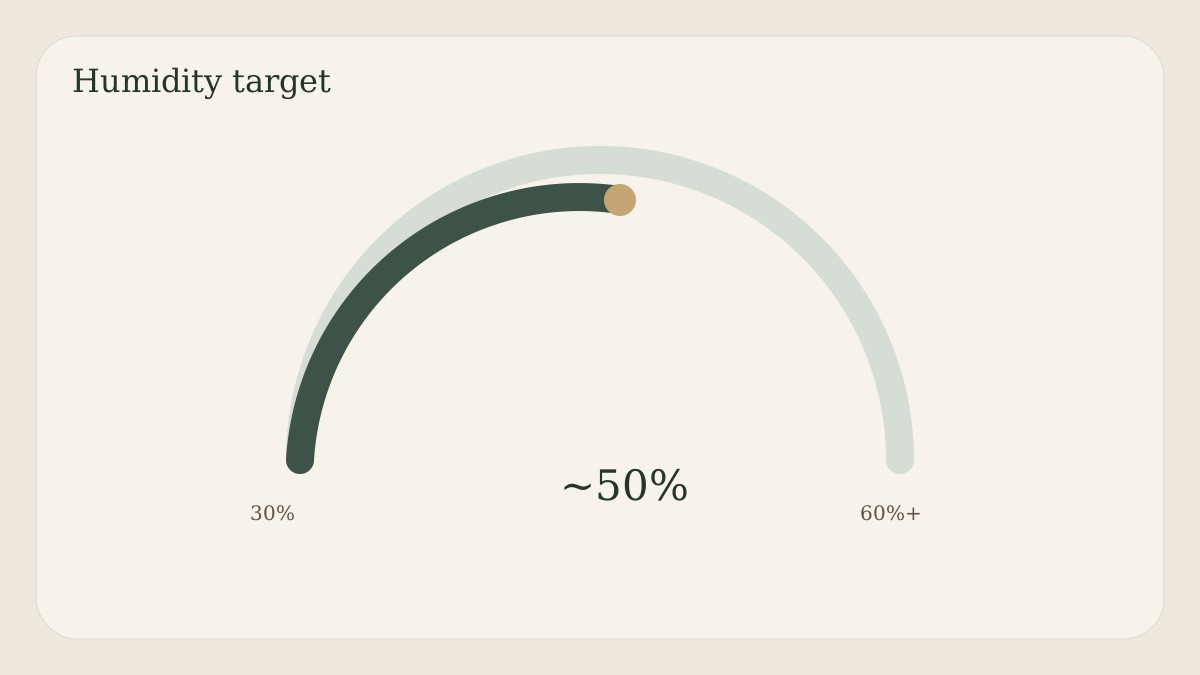
Pollen-heavy logs improve in a closed, filtered room and worsen on walks. House-heavy logs worsen after an hour at home, in one room, or when the blower starts, and they do not care that the trees are done. Rain can raise outdoor mold spores and also wet your sill. That is why the indoor humidity number matters. Under about 50 percent is the indoor target. A room that lives above 60 percent is growing something's grocery list, pollen or not.
A 20-second check
Which week did you actually have?
Do not treat the log as a lab
Allergy testing is a medical visit. A home mold plate is not. While you wait, stop the plug-in scents, wash the bedding hot, and get the wet room down toward 50 percent. If you wheeze or use an inhaler, the inhaler plan stays with your doctor. The house plan is the assessment and, for $99, the ClearNest steps with Ava. Pollen will come back next spring. A dry bedroom does not have to.
If this is your house, the free 60-second check names the rooms. Ava turns what you can't see into an order you can finish. The protocol is $99 once the plan is on the screen.
You can't see it. You can still change it.
The air behind the walls has a protocol.
A clean-looking room can still feel wrong. The free check names your rooms and a plan. The protocol is the calm order after that.
Start free 60-second check- 14-day refund if it isn't useful for your home.
- Educational home guidance, not a diagnosis or a lab test.
- Answers stay on this device. Privacy
Already named your plan? Unlock the protocol
Common questions
Can I be allergic to both?+
Yes. That is common. The log tells you which one to fight on a given day. The wet wall is still worth drying.
Do HEPA filters replace medicine?+
They lower particles in a closed room. They do not treat asthma, and they do not dry a leak. Use them after the water is handled, alongside whatever your clinician prescribed.
Why is it worse at night?+
You are in one room for hours, often the coldest one, with your face near bedding. Night plus a damp bedroom is a strong house clue.
Keep reading
Educational home guidance, not a diagnosis or a lab test. ClearNest does not treat illness. Read the full disclaimer.
 Talk with Ava